If you’ve been dealing with a skin condition, joint pain, or circulatory problem that keeps coming back — your Ayurvedic doctor may have mentioned Raktamokshana. Here’s everything you need to know, simply put.
What Is Raktamokshana?
Raktamokshana means liberation of blood — Rakta (blood) + Mokshana (release).
It is a controlled, therapeutic removal of a small amount of impure blood from the body. Once removed, the body naturally produces fresh, healthy blood — and healing begins from within.
Ayurveda teaches that blood can become contaminated over time due to poor diet, stress, pollution, and toxin buildup. This impure blood is often the hidden root cause of skin disease, inflammation, and joint pain. Raktamokshana removes it directly — not just masking the symptom, but clearing what’s causing it. It is one of the five classical Panchakarma therapies, practiced in Kerala for over a thousand years.
Which Conditions Does Raktamokshana Help?
This is the question most patients come with — and the answer is broader than most people expect.
The common thread across all of them is vitiated Rakta or aggravated Pitta at the root of the problem.
Skin Conditions
- Chronic eczema — especially with intense itching, heat, and repeated flare-ups
- Psoriasis — to reduce plaque, inflammation, and the frequency of outbreaks
- Acne and cystic acne — when driven by internal heat and hormonal Pitta aggravation
- Urticaria (hives) and allergic skin reactions
- Hyperpigmentation, melasma, and stubborn dark patches
- Recurring fungal infections that don’t fully clear with antifungal treatment
- Non-healing wounds and diabetic ulcers
Joint and Musculoskeletal Conditions
- Gout (Vatharakta) — one of the primary classical indications for this therapy
- Rheumatoid arthritis — particularly with significant heat, redness, and swelling
- Inflammatory osteoarthritis in weight-bearing joints
- Sciatica with a burning or heat quality in the pain
Circulatory and Vascular Conditions
- Varicose veins — leech therapy is especially effective here
- Haemorrhoids — particularly inflamed or bleeding piles
- Hypertension with Pitta-type symptoms: heat, flushing, irritability
Other Conditions
- Chronic migraines with burning or visual disturbance
- Liver congestion and elevated bilirubin with associated skin changes
- Recurring tonsillitis
- Certain cases of hair loss driven by scalp inflammation and poor circulation
How Is It Done? The Two Methods
There are two main methods and the choice between them depends entirely on your condition and your constitution, assessed by your physician.
Leech Therapy
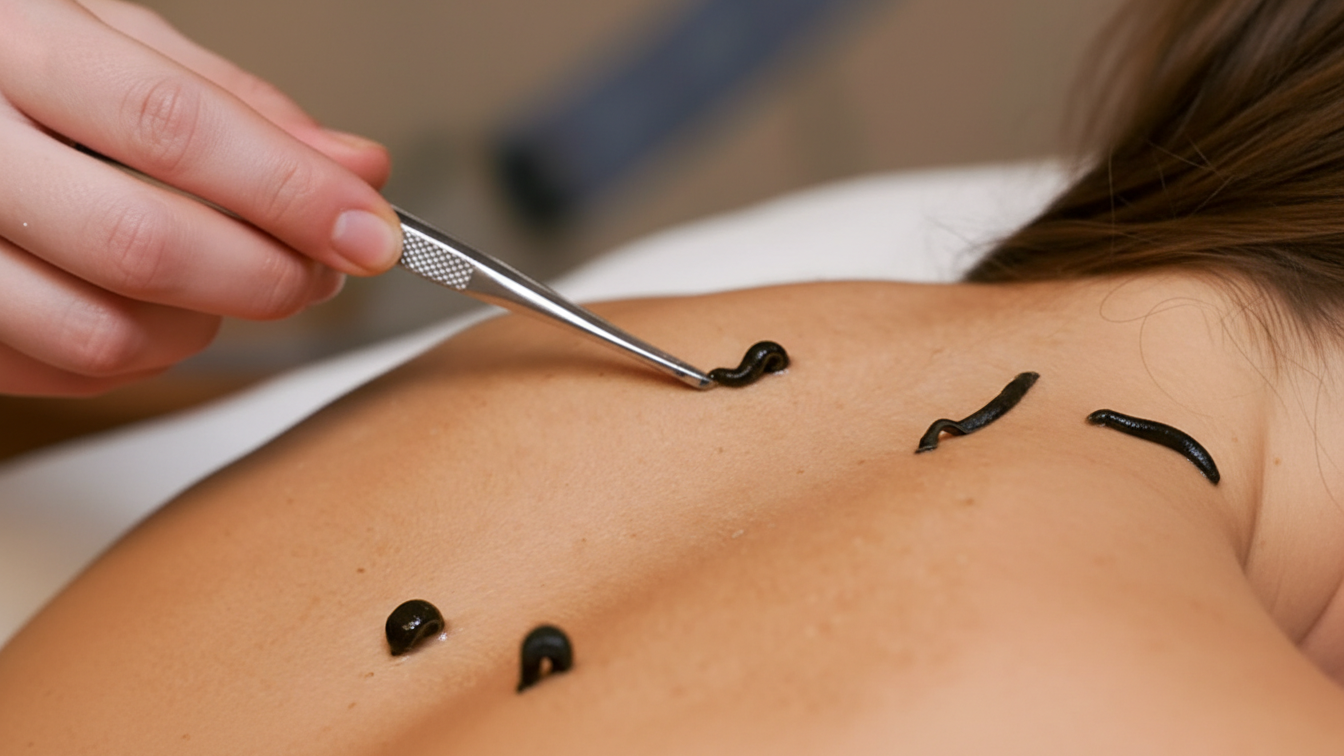
Medicinal leeches (Jalauka) are applied to the affected area. They draw out stagnant, impure blood while simultaneously releasing natural anti-inflammatory and anticoagulant compounds through their saliva — so the leech is not just removing bad blood, it is actively healing the tissue at the same time. Each session lasts 20–60 minutes. A single leech draws around 10–30 ml of blood.
Most patients feel mild warmth or tingling — the leech’s saliva contains a natural anaesthetic. Most feel nothing at all.
Best for: localised skin conditions, varicose veins, inflammatory joint pain.
Venesection (Siravedha)
A sterile instrument is used to draw a small, measured quantity of blood directly from a vein — similar in concept to a blood test or donation,
but far smaller in volume (typically 50–100 ml) and performed with specific Ayurvedic intent. Patients often feel a noticeable sense of lightness and relief afterward, particularly those with Pitta-driven conditions.
Best for: systemic blood vitiation, hypertension, gout, deep-seated skin disease.
Who Should Not Do Raktamokshana?
Ayurvedic texts are very clear about contraindications, and at Prakrithe ayurveda we take them seriously. Please be upfront about your health history during your consultation — this information directly protects you.
Raktamokshana is generally not recommended for:
- Pregnant women
- Those with bleeding disorders such as haemophilia
- Patients currently on blood-thinning medications like warfarin or antiplatelet drugs — unless cleared by both your allopathic and Ayurvedic physician
- Anyone with severe anaemia (haemoglobin below 9 g/dL)
- Children under 12 years of age
- Elderly patients above 70 — special physician assessment required
- Patients with advanced kidney or liver disease
- Anyone with active infection or fever at the time of intended treatment
People who are extremely weak, debilitated, or have very low body weight
If you are unsure whether any of these apply to you, that is exactly what the initial consultation is for. Don’t self-screen — let your physician assess.
What Does Raktamokshana Cost in Ernakulam?
We’ll be straightforward with you: the cost of Raktamokshana in Ernakulam varies depending on the method used (leech therapy tends to involve different considerations than venesection), the number of sessions required, whether it is combined with other Panchakarma treatments, and the specific condition being treated.Because Raktamokshana is always preceded by a physician assessment and tailored to your individual health profile, a single flat price doesn’t apply.
Contact Prakrithe Ayurveda directly to get a clear, honest picture of what your treatment plan would involve and cost.
FAQ
Your physician first assesses your health and recommends the right method — either leech therapy or venesection. The affected area is cleaned, the procedure is performed, and you rest for about 30 minutes. Your doctor will guide you on diet and medicines to follow at home afterward. The entire process is done under physician supervision in a clinical setting.
For most patients, no. In leech therapy, the saliva contains a natural anaesthetic — most people feel only mild warmth or nothing at all. Venesection feels like a routine blood draw. After the session, mild itching at the site is normal and settles within a day or two. Most patients are surprised by how gentle it actually is.
Skin conditions often improve within 2–4 weeks. Joint and circulatory conditions may take longer depending on severity.
Tell your physician everything you are taking. Blood thinners especially need to be disclosed before treatment.
Yes. Classical Ayurveda recommends Raktamokshana during the post-monsoon season (October–November) as a preventive blood purification even for healthy individuals.